It never rains but pours for First Vice-President Jane Ansah, who recently complained of being excluded from Cabinet meetings.
Just over a year after President Peter Mutharika unveiled the retired Justice of Appeal as his running mate in the September 16 2025 General Election, she is not getting publicity from the State-funded Malawi Broadcasting Corporation (MBC).
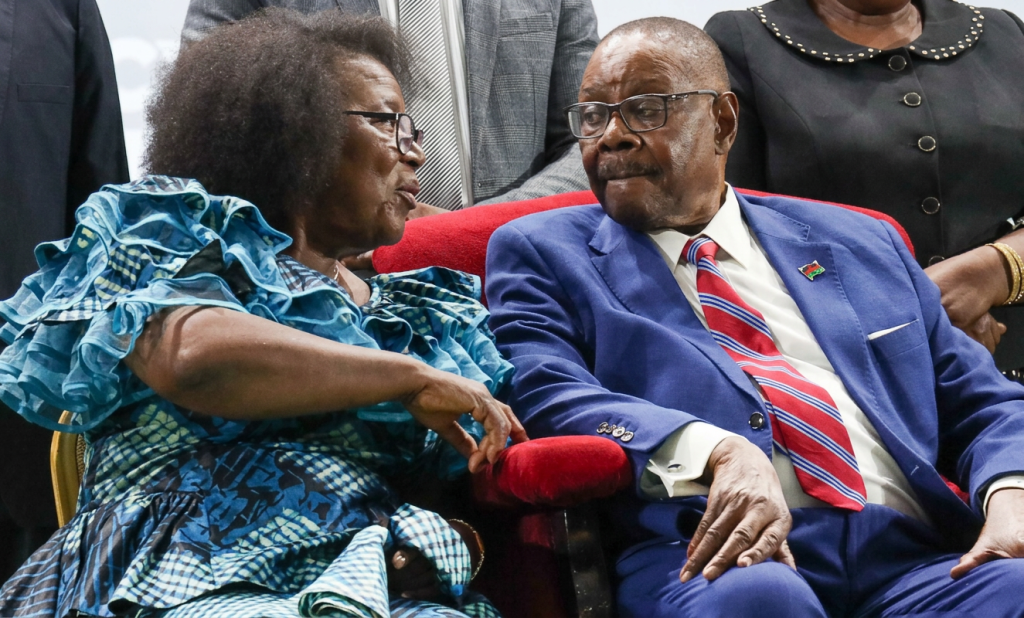
“What I know is that we have been inviting MBC to our events, but the stories are not broadcast [on both radio and TV]. So, maybe, yes, they are giving us a blackout,” her director of communications, Richard Mveriwa tells The Nation.
Last month, Ansah publicly complained of being sidelined from official duties, including Cabinet meetings.
She accused Chief Secretary to the Government Justin Saidi of not sending her advance paperwork for Cabinet meetings, but both Saidi and Mutharika have not responded to the allegation.

Ansah spoke of cordial ties with Mutharika, but her disappearance from MBC airwaves could be the latest sign of a snapping bond.
Section 87 of the Communications Act reads: “MBC shall, in the provision of its broadcasting services, function without any political bias and independently of any person or body of persons.”
However, MBC traditionally operates as a governing party’s propaganda mouthpiece despite criticism from successive presidents.
‘Unacceptable’
A week before his comeback in 2025, Mutharika, 86, publicly condemned its “attacks” on his age as unprofessional and unacceptable.
He accused MBC of abandoning its mandate for a partisan agenda, saying: “I was very concerned with MBC.
“They insulted me terribly. I even wrote them a letter asking what wrong I had done, but they never responded.”
However, his administration has done little or nothing to fix the decried MBC bias.

Minister of Information and Communications Technology Shadric Namalomba publicly rebuked the 62-year-old broadcaster for losing public trust to the extent that no one wins a vote with its bias.
In December 2024, he hit at its staff for “deliberate failure to uphold the national broadcaster’s mandate, stressing that “political bias and unprofessional conduct will no longer be tolerated”.
He warned: “If anyone in MBC does not subscribe to our belief and the belief of the DPP administration that MBC must operate as a national broadcaster, they will be fired.”
The rants preceded the sacking of MBC director general George Kasakula, weeks after armed ruffians forcibly paraded him on the State-funded TV to apologise for age-related attacks on Mutharika during the election campaign.
However, it appears that Kasukula’s departure alongside perceived anti-Mutharika journalists has not healed the broadcaster’s systemic bias the incumbent leader and his predecessor, Lazarus Chakwera, promised to fix.
The former president also had a sour taste of MBC favouritism, which he promised to end.
His media-savvy Minister of Information, Gospel Kazako, vowed to “sanitise MBC so that it runs professionally”.
“MBC belongs to people of Malawi and Malawi belongs to all Malawians. We want everyone to have equal opportunities,” said the Zodiak Broadcasting Station proprietor, capping his first trip to MBC’s Kwacha Studios.
Ansah’s blackout exposes a new low in the taxpayer-funded broadcaster’s political propaganda, dating back to the one-party era.
Media Institute of Southern Africa (Misa) Malawi Chapter chairperson Felix Washon says the Communications Act creates both legal and moral expectation for MBC to be “an impartial platform for everyone”.
‘Public interest first’
MBC should encourage free and informed debate on matters of public interest, he says.
“Everyone, whether political or apolitical, rich or poor, should not be barred from featuring on MBC,” he says. “It is the professional and public interest mandate of MBC to ensure that the broadcaster operates as a true public broadcaster, in line with the spirit of the Communications Act and the African Charter on Broadcasting.”
The United Nations Educational, Scientific and Cultural Organisation (Unesco) charter of 2001 requires all State-controlled broadcasters to transform into accountable public service broadcasters “that serve the overall public interest, avoiding one-sided reporting and programming” regardless of religion, political belief, culture, race and gender.
Washon, a former MBC journalist, says the broadcaster remains crucial in providing access to accurate and credible information to promote effective participation in democratic governance.
“People can only effectively participate in the governance process based on accurate and balanced reporting,” he says.
Human rights campaigner Michael Kaiyatsa backs calls for MBC to revert to its public service mandate, saying it should be allowed to make independent, professional editorial judgements on what constitutes news instead of “operating as an extension of the political interests of whichever party happens to be in power”.
He argues: “No public office holder has an automatic right to have every activity broadcast [on MBC], but there is a fundamental difference between legitimate editorial discretion and systematically excluding a particular public official because of political considerations.
“If the determining factor is that Ansah has purportedly fallen out with Mutharika or sections of the governing party, it is a serious departure from MBC’s statutory obligations. It would also be deeply worrisome if we are reproducing a pattern that has existed under successive administrations, whereby public media coverage of senior political figures rises or falls depending on their relationship with the President of the day.”
No comment?
Kaiyatsa asked MBC and government spokesperson Namalomba to clarify whether there has been any instructions to stop coverage of the First Vice-President.
However, Namalomba said: “Wait for MBC to give you the comment.”
However, MBC public relations officer Chisomo Mwamadi gave an seven-word reply.
“MBC will not comment on this matter,” he said when asked about the supposed ban on Ansah-related news.
This comes as the President increasingly delegates Cabinet ministers to represent him at functions the elected Vice-President attends.
The turbulent ties date back to last year, when Ansah’s private trip to the UK, which included a leaked entourage of at least 15 people and State-funded budgets for warm clothes, brought Mutharika’s austerities into question.
Since then, Mutharika’s handpicked Second Vice-President Enock Chihana has enjoyed more delegated trips and MBC coverage.
MBC’s propaganda stirred a backlash after the courts annulled Mutharika’s ‘tippexed’ re-election—in May 2020—when its 7 pm Chichewa news bulletin contained obscenities against then Vice-President Saulos Chilima, who died in a military plane crash in June 2024.
MBC later apologised for the scandal, but only sacked journalists behind the unethical broadcast after Chakwera defeated Mutharika in the June 2020 court-ordered presidential poll.
*Additional reporting by JAMES CHAVULA, Staff Writer.